Loneliness in a Relationship — Part 2: Finding Your Way Back

The Bridge — What Lives in the Silence
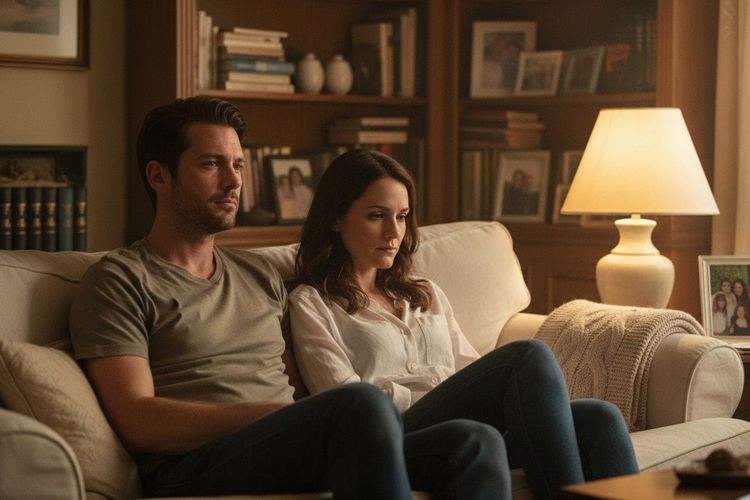
In Part 1 we talked about how the silence arrives. But we have not yet talked about what it actually feels like to sit inside it. What feelings prevail in those quiet moments between two people who have run out of things to say to each other, but have not yet run out of love, or hope, or the particular anguish of not knowing which one it is.
What each person carries inside that silence is private, and rarely shared. One of you may feel invisible — present in every practical sense, and yet somehow not quite seen, not quite real to the one person who is supposed to know you best. One of you may feel grief — aware of the discrepancy of what you expected and what you actually receive from your partner. Or you may have arrived at something worse than sadness: a flat, grey resignation that has been there so long it no longer feels like a feeling. It just feels like the way things are.
And then the thoughts come. They tend to arrive in the quiet — at night, in the car alone, in the shower, in any unguarded moment when the noise of daily life drops away and there is nothing left between you and what you actually feel. They are grief thoughts, which means they move backwards. They reach into the past and they redefine it, slowly and without mercy, as a series of wrong turns.
Have I wasted my life by choosing this person? That thought, when it arrives, lands differently than other thoughts. Because it is not just about the relationship. It is about you — your judgement, your instincts, your ability to know what was good for you. And when you sit with it long enough, it begins to shake something fundamental. Not just your faith in the relationship. Your faith in yourself.
What would have happened if I had chosen differently? This one is particularly cruel, because it is completely unanswerable. There is no way to know. And yet the mind returns to it. Again and again, in the dark, in the silence, in the spaces where connection used to live. It becomes almost a companion — sad, useless, irresistible. Offering nothing except the cold comfort of a door you cannot open.
If I had known then what I know now. But you didn't. Nobody does. You were a different person when you made that choice — younger, less worn, carrying a different set of experiences and a different understanding of what you needed. You chose with what you had. That is not a mistake. That is simply what it means to be human.
Becoming aware of your feelings is the beginning of seeing clearly. When you name what you are feeling, when you make it conscious rather than leaving it to move through you unnamed, it begins to lose some of its power over you. A feeling you can name is a feeling you can see. And seeing clearly — however much it costs — is always, always the necessary first step toward something better than this.
The conditions we wait for
We are often convinced that until the right conditions eventually arrive and do the work for us — when our finances improve, when our partner finally sees our worth, when we buy that new house and our lifestyle improves — we are not entitled to expect anything better.
It would not be fair — or honest — to dismiss those three conditions entirely. Because they are not fantasies. When finances genuinely improve, something real shifts in a household. The low hum of anxiety that coloured every conversation quietens. People breathe differently. They become, as the pressure lifts, more recognisably themselves — warmer, more patient, more present. The person you fell in love with resurfaces, briefly, from beneath the weight of everything they have been carrying. And if recognition comes — if your partner finally sees what you have been building, finally understands what it has cost you, finally offers the acknowledgement you have been waiting for — that too is important. It can feel, in the right moment, like being handed back a part of yourself you had given up on finding.
And if you buy the house — the one you talked about for so long, the one that represented the life you were going to have together — there is a genuine joy in that. A surface joy, perhaps. But surface joy is not nothing. It is warmth. It is relief. It is the particular pleasure of a shared achievement, of standing in a new space together and remembering, briefly, that you are on the same side.
So yes. Better circumstances help. They take a real weight off a relationship, and people with less weight on them are easier to be close to, easier to reach, easier to love. In that sense, the hope is not irrational. The conditions, when they change, do change something.
But here is what they cannot do.
They cannot reach the gap inside you. The one that exists not because of the finances or the recognition or the size of the house, but because somewhere along the way you and your partner stopped truly knowing each other. That gap does not respond to external improvements. It sits quietly beneath the new conditions, unchanged, waiting. You still make the hard decisions alone, because your partner doesn't know what you think or how you feel or what it costs you to keep going. You still lie awake with things you cannot say. You still feel, in the midst of the improved circumstances, a loneliness that the improvement hasn't touched — and that you cannot quite explain, because on paper everything is better now.
And then the novelty of the new conditions begins to fade. As all novelty fades. As we have already seen it fade, in every other area of this story. The relief of financial breathing room becomes the new normal. The acknowledgement you finally received becomes a memory. The new house becomes simply — the house. And the relationship, released from the temporary brightness of changed circumstances, returns to its baseline.
Which was never about the circumstances. It was always about the connection. Or the absence of it.
Two strangers, with more toys, more distractions, more money to spend.
This is not a counsel of despair. It is the opposite. Because if external conditions cannot fix what is broken between two people, then the reverse is also true — the absence of those conditions is not what broke it. The gap was always an inside job. Which means the way back is also an inside job. It requires not better circumstances but a different quality of attention. Not more money but more honesty. Not a new house but a genuine willingness to finally, carefully, courageously turn toward each other and begin.
The conditions may or may not improve. You cannot always control that. But the decision to see each other clearly, to reach across the distance, to say something real — that is available to you right now, in whatever house you are living in, with whatever money is in your account. It always has been.
Many people spend years waiting for circumstances to fix what only honesty can fix.
The first movement toward each other — stopping the comfortable story
There is a particular kind of courage that nobody talks about. The courage of simply seeing what is true. Of looking at your relationship — your actual relationship, not the one you hoped for, not the one you present to the world, not the one you remember when the two of you first met — and saying: this is where we are. This is what this is. I am not going to look away from it anymore.
Most people never quite do this, because looking clearly is genuinely painful, and the mind is extraordinarily resourceful when it comes to protecting us from pain. It offers us busyness. It offers us distraction.
But there is a cost to that distance. Because the thing you are not looking at does not disappear simply because you have stopped looking. It waits. It grows, quietly, in the space you have agreed not to examine. And the energy required to keep not looking — to maintain the comfortable story, to perform the version of your relationship that the world sees — is energy that comes from somewhere. From your joy, usually. From your aliveness. From the particular brightness that people have when they are living honestly inside their actual life rather than a managed version of it.
Awareness — real awareness — does something that no technique or strategy can do on its own. It tells you what you are actually working with. And you cannot find your way back to each other, or forward into something better, without first knowing honestly where you are.
This means sitting with some uncomfortable questions. Not attacking yourself with them, not using them as weapons against your partner, but holding them quietly and giving them the space to be answered honestly.
When did you last feel genuinely close to your partner? Not comfortable — close. Not fond — truly seen and truly met. Can you remember the last conversation that went somewhere real, that left you feeling more alive rather than simply less alone? When did you stop having those conversations?
What are you not saying? Because there is almost always something. A need that has been quietly swallowed for so long it has stopped feeling like a need and started feeling like an irrational demand. A feeling that you have decided, for whatever reason, is not safe to express. A truth about what you want from this relationship — or from your life — that you have not yet allowed yourself to say out loud, perhaps not even to yourself.
And perhaps the most important question of all: what do you actually want? Not what you think you should want, not what would be easiest, not what would cause the least disruption. What do you genuinely, honestly want from this relationship, if it were possible to have it? Can you even answer that? Many people find, when they sit with this question seriously for the first time, that they have been so busy managing and maintaining and surviving that they stopped knowing what they wanted a long time ago.
These questions are not comfortable. But they are generous. Because they treat you as someone capable of honesty, capable of growth, capable of something better than a life lived carefully around the discomfort. And that generosity — extended first to yourself, and then to your partner — is the start of a better understanding between you.
You cannot change what you cannot see. But once you can see it — clearly, honestly, without the comfortable story softening the edges — you have something real to work with. And something real to work with is the most valuable thing there is.
The second movement toward each other — the difference between curiosity and attention
Most relationship advice, at some point, tells you to be more curious about your partner. Ask more questions. Show more interest. Try to rediscover the person you fell in love with. And the intention behind that advice is sound. But there is something it misses — something important, something that can make the difference between a conversation that opens a door and one that closes it permanently.
If your partner has spent months or years learning to keep things inside — and many people in lonely relationships have, because it was safer, simpler, less disappointing than reaching out and finding no one there — then sudden curiosity does not always feel like warmth. It can feel like surveillance. Like an interrogation with friendly packaging. The questions arrive and something in them tightens. What's the catch. Why do they want to know this now. What are they going to do with the answer. The very thing meant to create closeness creates suspicion instead. And the door, rather than opening, closes a little further.
What actually helps — and this is something that can only be learned through the patience of living close to another person for a long time — is not curiosity. It is attention. Quiet, undemanding, unhurried attention. The kind that doesn't require anything back.
Here is what that looks like in practice. Your partner picks up their phone and shows you a video. A video that is interesting to them, but not necessarily to you. And your first reaction — the usual one, the one that comes before you have time to think — might be to glance at it for a couple of seconds and return to your own screen. Because you are tired, and busy, and you know that engaging, if you let yourself, will take time you had already allocated elsewhere. In that moment, without meaning to, you are choosing practicality over your partner's need for connection.
So you don't do that. Instead, you put your phone down. You watch the video — really watch it, with genuine interest. You ask about something that caught your attention. You say something honest about what you found fascinating. And your partner, sitting beside you, feels seen.
That is all they needed. Five minutes of unhurried attention. Not a deep conversation. Not a courageous question. Just the simple act of being present for what the other person was showing you.
Because their invitation was never really about the video. It was a bid for connection — quiet, unannounced, easy to miss. And the question behind it was not what do you think of this. It was something closer to: do you see me? Do you take my world seriously? Am I someone worth five minutes of your time?
This is not a small insight. How many moments of reaching out — disguised as a video — were met with the cold water of indifference when all they needed was a few minutes of warm attention?
Attention is not necessarily agreement. It is not pretending that everything they say is correct. It is not abandoning your own sense of what is right or wrong. It is simply the willingness to enter your partner's world for a moment — to stand where they are standing and look at what they are looking at — before returning to your own. They are simply asking you to look. To be there. To receive what they are offering without immediately doing something with it. That is attention. And attention, given freely and without agenda, is one of the most profound forms of love there is.
The third movement toward each other — willingness, and what to do with it
Everything we have talked about so far points toward the same question eventually. And the question is not complicated, even if the answer sometimes is.
Are both of you willing?
Willing to see the distance honestly, without blame and without defence. Willing to acknowledge that something has shifted, that the relationship you have now is not the one you intended, and that neither of you got here alone. Willing to make the effort — not the grand gesture, not the dramatic declaration, but the quieter, more demanding, more sustainable effort of showing up differently. Of choosing, every day, to turn toward each other rather than away.
Willingness is the only thing that makes any of what follows possible. Without it, the most elegant strategies and the most generous intentions will dissolve into the same silence they were meant to break. You cannot reach someone who has decided, consciously or not, that they are done reaching back. And you cannot build something with someone who has stopped believing, somewhere deep and unspoken, that building is still worth doing.
This is important to say plainly, because one of the most painful positions a person can find themselves in is trying, consistently and generously, while their partner remains still. Giving attention while receiving none. Initiating while being met with indifference. Growing while the other person watches from a distance, unmoved. That asymmetry is not a communication problem. It is a willingness problem.
But when willingness is present — even imperfectly, even just as a quiet mutual acknowledgement that something needs to change — then two paths open. And both of them lead somewhere real.
The first path is rebuilding. Not reconstructing what was there before — that relationship, the one you had at the beginning, belongs to who you both were then, and trying to return to it is like trying to return to a dream that has already passed. But building something new. Choosing, deliberately and together, new territory that belongs to neither of you yet. A place where neither of you is the expert and neither of you is the student. Where you are both beginners, equally uncertain, equally curious, equally capable of being surprised.
It might look like a trip to somewhere neither of you has been. A class in something neither of you knows. A conversation about a book neither of you has read yet, started simultaneously, discussed as you go. It might look like asking your partner a question you have genuinely never asked before — because you realized that the person across from you is not, in fact, a book you have already finished. They are a person who has continued becoming, quietly, while you were both busy with other things. And that person — the one they are now, not the one you met — is someone you have not yet fully met.
New territory does this. It creates the conditions for discovery. And discovery is where genuine connection lives. You cannot manufacture it. But you can create the space for it to happen. And sometimes that is enough.
The second path is for two people whose inner worlds have moved into different landscapes — who no longer share the same interests, passions or ways of seeing. For whom building a shared world based on identical interests is no longer possible. But who are still willing to be genuinely interested in each other.
This path does not ask you to pretend. It does not ask you to perform an interest you don't feel, or to abandon the world you have built inside yourself in order to inhabit your partner's. It asks something different, and more sustainable: genuine interest in who your partner is — even, and especially, in the parts of them you don't share.
There is a difference between polite tolerance and genuine interest. Polite tolerance says: I don't understand this, but I will sit here quietly while you talk about it. Genuine interest says: I don't understand this, and I want to. Not because I am going to adopt it. But because it matters to you, and you matter to me, and therefore the things that light you up are worth my attention.
What draws you to this? What does it give you that other things don't? What does it feel like when you are fully inside it? These are not questions about the interest. They are questions about the person. And the person — always, underneath everything — is what you fell in love with.
That choice — to remain interested in someone whose world no longer perfectly overlaps with yours — is not a compromise. It is its own kind of love. Quieter than the love of early discovery, but in some ways more deliberate. More chosen. And therefore, perhaps, more real.
The fourth movement toward each other — the daily choice
We have talked a great deal about how distance grows. How it arrives gradually, without announcement, through the ordinary accumulation of small neglects and small silences and small moments of turning away. What we have not said explicitly — though it has been underneath everything — is that closeness works exactly the same way. It does not arrive in a single conversation or a single evening or a single brave declaration. It arrives the same way the distance did. Gradually. Through the ordinary accumulation of small choices to turn toward rather than away.
It is a direction you choose. Every day. Sometimes every hour. In the small moments that don't feel like choices because they are so ordinary, so unremarkable, so easy to let pass without noticing. The moment you put your phone down when your partner speaks. The moment you ask a question and actually wait for the answer. The moment you watch a video with genuine attention instead of quiet dismissal. The moment you say something real instead of something safe.
These are not grand gestures. They will not feel, in the moment, like they matter very much. That is precisely what makes them so easy to skip. And precisely what makes them, accumulated over days and weeks and months, the difference between a relationship that slowly closes and one that slowly, tentatively, begins to open again.
This is both the most hopeful and the most honest thing this book can offer. Hopeful, because it means that the distance between you and your partner — however wide it has grown, however long it has been there — was built from small things. Which means it can be rebuilt from small things. You do not need a different life, or different circumstances, or a different version of yourself. You need the daily willingness to choose, in the small moments that present themselves to be present. To be the person who reaches rather than retreats.
And honest, because it means there is no shortcut. No single conversation that fixes everything. No weekend retreat that resets the distance of years. No book that does the work for you. The work is done in the ordinary Tuesday evenings, the Sunday afternoons, the unremarkable moments that make up the texture of a shared life. It is done quietly, without an audience, without the guarantee of an immediate response. It is done because you have decided — not once, but again and again — that this person is worth your attention. That this relationship, however imperfect, however far from what you once imagined, is worth the effort of your continued presence.
That decision will not always feel romantic. It will not always feel rewarding. There will be days when you reach and find no one reaching back, and you will have to decide whether to reach again tomorrow. There will be moments when the distance feels so familiar, so settled, so much like simply the way things are, that choosing to close it feels almost absurd. Like moving furniture that has been in the same place for so long the floor has shaped itself around it.
Move it anyway. Not dramatically. Not all at once. Just — a little. Just enough to remind both of you that the room can be arranged differently. That the way things are is not the same as the way things have to be. That two people who have grown distant did not do so because distance is their destiny, but because distance was what happened when neither of them was paying quite enough attention.
Pay attention now. To the person across from you. To what they are carrying. To what they are not saying. To the bid behind the video and the grief behind the silence and the reaching out behind the apparently casual remark that you almost let pass without catching. Pay attention to all of it. Not perfectly. Just — more than yesterday.
That is all connection ever asks. Not everything at once. Not a transformation overnight. Just the quiet, renewable, entirely ordinary decision to turn toward the person you chose, one more time, and see what is still there. You may be surprised. People who have been unseen for a long time have a great deal saved up. And sometimes all it takes is one genuine moment of being truly received — truly heard, truly noticed, truly met — for something that has been closed for years to open, just a little, toward the light.
What is still there, underneath everything
You have read a great deal in these pages about distance. About how it grows, and why, and what it costs. About the silence that has weight, and the grief that has no occasion, and the particular loneliness of being invisible to the person who is supposed to know you best. We did not look away from any of it. We named it as honestly as we could. Because you deserved that honesty, and because the only path through something difficult is the one that goes directly through it, not around it.
But there is one more thing worth saying. Something that the distance, and the silence, and the accumulated weight of years can make very easy to forget.
In most cases — not all, but most — underneath the stress and the disconnection and the lack of communication and the long quiet evenings where nobody says anything real — there is still something there. It may not look like the love we were shown in films. It may not feel like the intoxication of the beginning, or the effortless closeness we once imagined love would eventually become. It may be quieter than that, and less certain, and harder to name.
But it is there. A genuine care about the other person. A wanting — often unspoken, often unrecognised, often buried so deep beneath the exhaustion and the distance that we have stopped knowing it is there — to see them happy. To see them bright. To see them achieving what they came here to achieve, becoming who they were always capable of becoming, living a life that feels full rather than managed.
That wanting is love. Not the movie version. Not the version that requires perfect communication or shared interests or the right circumstances. The quieter version. The one that survives the drift and the silence and the years of not quite reaching each other. The one that is still there in the moments when you watch your partner from across the room and feel — beneath the distance, beneath the loneliness, beneath everything that has accumulated between you — something that is not indifference. Something that still, however faintly, cares.
And often this is what we want without realising it. We want the person we chose to be okay. More than okay. We want them to be happy, and seen, and fully alive. We have simply forgotten, somewhere in the years of survival and distance and unspoken everything, to say so. To show it. To let it be visible in the small daily choices that are, in the end, what love actually looks like when the novelty is gone and the real thing remains.
The person across from you is carrying things you don't fully know. They have a grief that probably looks different from yours, and a loneliness that probably has a different texture, and a version of the same hope you have — that somewhere underneath everything that has built up between you, something real is still alive. They may not know how to say it. You may not know how to say it. But the not saying is not the same as the not feeling.
Say something. Not the perfect thing. Not the brave, prepared, carefully rehearsed thing. Just something real. Something that comes from the part of you that still cares about this person, however buried that part has become. Something small enough to feel safe, and true enough to matter.
That is where it begins. That is where it has always begun. Not in the grand gesture, not in the dramatic conversation, not in the perfect moment that never quite arrives. In the small, ordinary, entirely available decision to turn toward the person you chose — one more time — and let them know you are still there.
You are still there. And so, in all likelihood, are they.
One final note.
This guide was written for relationships where both people are safe. If what you are navigating is distance and disconnection, the lines you have just read were written with you in mind.
But if your relationship involves harm — physical, emotional, or the kind of quiet, consistent manipulation that leaves you doubting your own perception — please know that connection is not the priority here. Safety is. And reaching out to a counsellor or support service is not a failure. It is the beginning of something different, and something better.
Something To Take with You
The Connection Toolkit
15 Low-Stakes Bids — The Gestures
These are small physical acts that invite your partner back into your space without requiring a conversation. They ask nothing back. They simply say, quietly and without words: I am still here. I still see you.
1.The 6-Second Hug— Research shows that six seconds is the minimum time needed for the body to release oxytocin, the hormone of connection and trust. Six seconds is longer than a greeting and shorter than a statement. It asks very little and offers a great deal.
2.The No-Agenda Walk— Fifteen minutes around the block. No phones. No talk about bills or schedules. Just two people, side by side, in the open air.
3.The Transition Text — A message sent during the day — thinking of you, or I hope your meeting goes well. No question asked. No reply needed. Just a small signal that you carried them with you into your day.
4.The Phone Down— When your partner walks into the room, put your phone face down. It is a small gesture and a powerful one. It says: you are more important than whatever was on that screen.
5.The Physical Anchor— A hand on the shoulder as you pass in the kitchen. A brief squeeze of the hand. Touch that asks nothing and offers presence.
6.The Shared Discovery — Send them a link — a song, an article, a short video — with a single note: this reminded me of you. The specificity is the point.
7.The Unasked Chore— Do one small task they usually handle without being asked and without mentioning it. Let them notice. Or let them not notice. Do it anyway.
8.The Morning Coffee Ritual— Bring them their coffee or tea exactly as they like it, before they ask. It is a small act of having paid attention. Of knowing them.
9. The Nostalgia Play— Put on a song that belongs to a happier time in your relationship while you are both in the house. Say nothing about it. Let the music do what music does — carry people back, briefly, to who they were when they first heard it together.
10.The Uninterrupted Five Minutes— Ask about their day. Then listen — actually listen, without a screen in your hand or a solution forming in your mind — for five full minutes. Let them finish. Let there be silence after they finish. That silence is not emptiness. It is respect.
11.The Soft Seating— Choose to sit next to them on the sofa — close enough that your shoulders touch — instead of in the separate chair. It is a small physical choice that carries a quiet message: I want to be near you.
12.The Micro-Note— A single sentence on a post-it note, left on the bathroom mirror or their laptop: I am glad you are in my life. Small enough to feel safe. True enough to matter.
13. The Mirroring Look— Catch their eye from across the room. Give a small, genuine smile. The kind that says: I see you over there, and I am glad you are here.
14.The Ask for Advice— Ask their opinion on something small. It is a way of saying: your judgement still matters to me. I still want your eye on my life.
15.The Parallel Activity— Invite them to sit together — reading, scrolling, whatever — with your legs touching. Together-alone, done with intention rather than habit. The contact is the message.
15 Vulnerability Scripts — The Words
These are phrases for when you are ready to speak. They are written carefully — starting with we and I rather than you, because you closes doors and we opens them. They are not scripts to be memorised and delivered. They are starting points. Take the one that feels closest to true, and make it your own.
1.The Reality Check— "I feel like we are living in the same house but we have been a thousand kilometres apart lately. I miss being close to you."
2.The Anti-Logistics Hour— "Can we have twenty minutes tonight where we do not talk about work, money, or the schedule? I just want to talk to you."
3.The Screen Request — "I am finding it hard to feel present with you right now. Could we put the screens away for a bit so I can feel like I am actually with you?"
4.The Seen Request— "I have been feeling a little invisible lately. Could we spend some time properly catching up this weekend?"
5.The Non-Solution— "I need to say something out loud, but I am not looking for a solution. I just need you to hear me. Is that okay?"
6.The Reassurance— "I know things have been quiet and stressed between us lately. I want you to know I am still on your side."
7. The Curiosity Bridge— "I feel like I have not properly checked in on your inner world lately. What has been on your mind that we have not talked about?"
8. The Soft Apology— "I am sorry I have been so distracted lately. I have not been as present as I want to be for you."
9.The Appreciation— "I noticed how hard you worked on that today. I want you to know I see it."
10. The Vulnerable Ask — "I am having a hard day and feeling lonely. Can I just sit near you for a while?"
11.The Shared Future— "I was thinking about when we did that together. It was such a good day. I would love to do something like that again soon."
12.The Safety Check— "I want to be able to tell you how I am feeling without either of us getting defensive. Can we try to just listen to each other tonight?"
13.The Check-In — "How connected to me do you feel lately? I want to make sure I am showing up properly for you."
14.The Dream Witness— "That video you showed me earlier — I have been thinking about it. Tell me more about why you love that idea."
15. The Simple Truth — "I love you. And I miss the way we used to talk. I would like to find our way back to that."
None of these will fix everything. None of them are meant to. They are simply the first step — the hand extended, the door left slightly open, the small signal sent across the distance that says: I am still here. I still want to find you. I have not stopped trying. That signal, offered honestly and without expectation of an immediate response, is where everything worth building always begins.




Member discussion