Two Years and Ten Minutes: The Quiet Architecture of Love
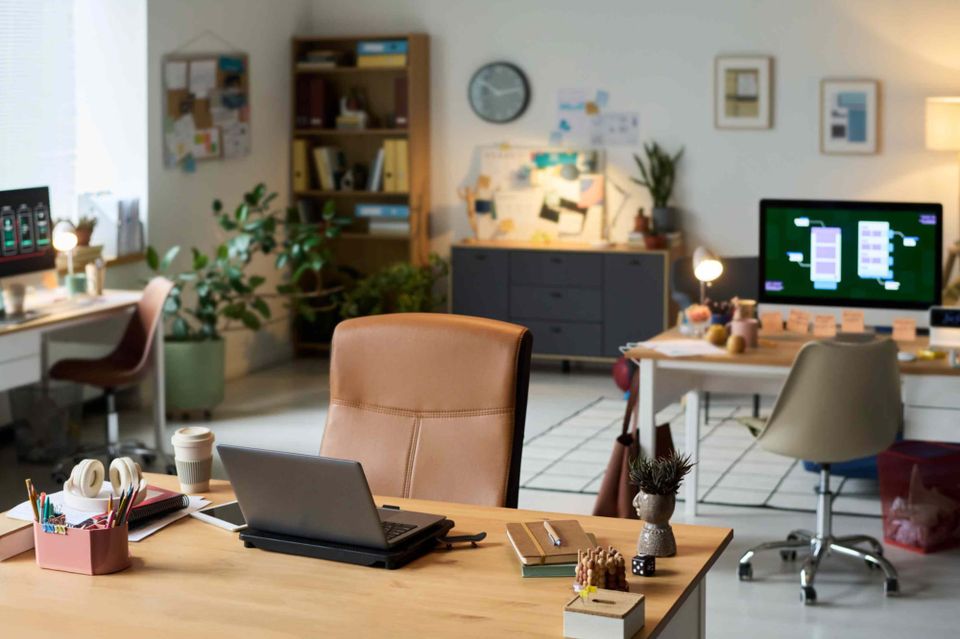
The office had two desks and a couch.
Sarah's desk was the first thing you saw when you walked in. Tom's was at the far end of the room — the supervisor's position, slightly removed, with a clear view of everything.
Including the door.
On a Tuesday afternoon in November, the door opened and Larry walked in. He worked two floors down and had no particular reason to be here. Larry was blonde, with grey quietly claiming the roots of his hair, and somewhere in his mid-forties. He entered with a wide smile and the energy of a man singing an old folklore love song that hadn't played on the radio in years. He looked around for a moment, as people do when they are pretending to have arrived somewhere by accident, and then he spotted the couch opposite Sarah's desk and lowered himself into it with the ease of someone who intended to stay.
Sarah was on the phone, having a conversation with an important client, a pen moving across a notepad in her left hand. Tom was on his own call at the far end of the room, his voice low and professional, his eyes on his screen.
Sarah finally looked up from her screen.
Larry smiled. I heard the coffee in this office is something else, he said.
Sarah laughed. She stood up without hesitation and moved toward the machine in the corner. The kind of gesture that came naturally to her — warm, unthinking, genuinely hospitable.
Larry took the cup. He sipped it slowly, with the considered expression of someone tasting something extraordinary. Then he lowered the cup and looked at Sarah.
From such beautiful hands, he said, you can expect nothing less.
The words landed in the room awkwardly— like something nobody had asked for.
Sarah smiled. The smile of a woman who had learned, long ago, how to receive this kind of thing gracefully without encouraging it further. Thank you, she said. And returned to her desk.
Sarah was thirty. Brunette, with hazel-green eyes that people tended to remember long after they had forgotten everything else about the conversation. She was not what anyone would call a model. But her face was the kind that made people look twice — and then, quietly, a third time. By any measure, she was the most attractive woman in the company.
Tom had not looked up from his screen once.
But he had stopped reading the moment Larry walked in.
Tom didn't go home and stare at the ceiling that night.
But something had shifted. Quietly, the way things shift when you finally see something you had been carefully avoiding.
Because Larry— whatever his limitations — had done something Tom had not done in two years.
He had shown up.
Clumsily, yes. Transparently, certainly. But he had been there, on that couch, making his intentions visible to Sarah in the only way he knew how.
And Sarah had handled it gracefully. Which meant she had handled this before. Which meant there would be a next time. And a time after that.
Tom understood something now that he had been avoiding for two years.
His silence was not protecting him. It was simply delaying the moment when someone else asked the question he had never asked. And that person — unlike Larry — might ask it well. Might ask it at the right moment. Might be someone Sarah looked at differently.
The fear was not really about losing Sarah to someone else.
It was more specific than that. It was the fear of having waited two years, having carried this carefully and quietly, and then watching someone who arrived ten minutes ago succeed where he had never tried.
There are people in every organization who become, over time, something larger than their title suggests. Mrs. Sonia was one of those people.
She had been with the company almost since its first day. Longer than most of the current staff had been alive. Long enough to have watched the business grow from a small office with three desks into what it was now. Long enough to have seen careers begin and end, partnerships form and dissolve, and every variety of human drama play out in the corridors between nine and six.
She could have retired years ago. The age was there. The years of service were more than sufficient. But Mrs. Sonia was not the kind of woman who retired to a television set and a quiet house. The company's founder — who respected her more than he respected most people he had ever met — had never seriously suggested it. He understood, without needing to say it, that some people hold an institution together simply by being present in it.
Her role now was more consultancy than office work. Advisory. Honorary. The kind of position that exists because nobody can quite imagine the place without the person.
Everyone in the company called her Mrs. Sonia. Not because they were asked to. Because it simply felt right. Because some people arrive at a certain age and a certain quality of presence that makes formality feel like the most natural form of respect.
She was also, though few people fully realized it, the person who saw everything.
It was Sarah's day off when Mrs. Sonia appeared in the doorway.
She did this occasionally — stopped by Tom and Sarah's office when she had a particular reason, stayed as long as needed, and left having said exactly what she intended to say from the beginning.Tom had learned this about her over the years. Mrs. Sonia never arrived anywhere by accident.
She looked around the room for a moment, as if noticing Sarah's empty desk for the first time.
Sari is not in today? she asked.
Day off, Tom said.
Mrs. Sonia nodded slowly, the way she nodded when she already knew something and was giving you the courtesy of believing otherwise. She moved toward the office and settled into one of the chairs opposite Tom's desk. Not the couch where she usually sat — the couch opposite Sarah's desk. Today she chose Tom's side of the room.
He noticed. He said nothing.
Can I offer you a coffee? he asked.
She smiled. Please.
Tom stood and moved toward the machine in the corner. Behind him, Mrs. Sonia smoothed her jacket and looked around the office with the unhurried attention of someone reading a room she had read many times before.
Yes, she said, almost to herself. Sari does need some time off. It is never easy, going through a break up.
Tom's hands stilled for just a moment.
Did Sarah break up with Jim? he asked. His voice carefully level. The voice of someone asking about the weather.
Mrs. Sonia looked at him calmly. A week ago, she said. Jim was not good for her anyway. She knew it before he did, I think. She usually does.
Tom brought the coffee and sat back down. He wrapped both hands around his own cup — something he always did when he needed something to hold — and looked at his desk.
A silence settled between them. The comfortable kind, with Mrs. Sonia. She had never been a woman who felt the need to fill quiet with noise.
Then she looked up at him. And there it was — that expression. Not quite a smile. Something older and more knowing than a smile.
Sarah is single now, Tom, she said. What are you waiting for?
Tom looked at her.
Mrs. Sonia picked up her coffee cup and waited.
She had not finished. She had barely begun.
The story continues in Part 2 — Two Years and Ten Minutes: The Question He Couldn't Answer.
Like all the figures in this series, Tom, Sarah, Larry and Mrs. Sonia are not real individuals. They are a composite — built from years of observing real lives, real loves, real failures and recoveries. The people who inspired their story may never read these words.
But they deserve to be understood.
Perhaps, through this, they finally are.



Member discussion