You Ask Nothing, You Receive Everything— A story of true, unconditional love
Paul and Fiona had built something together. Not much by the world’s standards. A small house with thin walls. A kitchen that smelled like coffee every morning. Dreams they had written together on invisible paper — a bigger house one day, a better car, a real vacation after years of postponing it because the money never quite stretched that far.
But dreams have a way of colliding with reality.
The mortgage consumed most of what they earned. Bills arrived before the salary did. Promises made in hopeful moments kept getting pushed to next month, next year, someday that never quite came. The arguments were real. About money mostly. Always about money. And they rarely ended cleanly — just faded into a silence that would settle over the apartment like dust. They would lie side by side in the dark, each carrying their own version of the same worry, each pretending to be asleep before the other.
But they were together.
And for Paul, that was everything.
For Fiona though, it was becoming something else.
It wasn’t that she didn’t love him.
She did. In her own way, she truly did.
But Fiona carried something inside her that had nothing to do with Paul. A hunger she couldn’t name. A need to prove something — to the world, to herself, to the girl she once was who had been told she would never amount to much. She wanted a life that looked like an answer to every person who had ever doubted her.
Paul’s love was real. But it was modest. And modest was the one thing Fiona could not make peace with.
Then another man appeared. Polished. Certain. Offering her a different kind of life.
And Fiona, human and hungry and tired of waiting for someday —
started to drift.
Paul noticed it the way you notice the season changing.
Not in one moment. In many small ones.
Her late nights. The way sleep seemed to find her less and less. And then the balcony.
She would wait until she thought he was asleep. Then quietly, carefully, she would step outside and close the glass door behind her. He would lie in the dark and listen. He couldn’t hear the words. The glass was too thick, her voice too low, the night too indifferent.
But he could hear the laughter.
Light. Easy. The kind of laughter that doesn’t belong to someone who is struggling. The kind that only comes when everything feels possible.
He had not heard her laugh like that in a long time.
He never said a word. He would close his eyes and pretend to be somewhere else. And in the morning he would make coffee for two and hand her a cup and ask about her day as though the night had not happened.
He knew. Deep down in the place where truth lives before the mind is ready for it —
He knew.
And he chose, every single morning, not to know.
The day she packed he stood in the doorway of their bedroom and watched her move around the room. She didn’t pack much. A handful of clothes. A few things that mattered to her. She left most of it behind — the modest dresses, the simple blouses, the life that no longer fit where she was going.
He watched her fold things and place them in the bag and he understood with complete clarity —
This was goodbye.
He didn’t cry. He didn’t speak. He stood very still and memorized her. The way she moved. The small furrow between her brows when she was concentrating. The particular way she smoothed a piece of clothing with her palm before placing it down.
She left without a scene.
Paul stood alone in the room, which still held the faint trace of her perfume. He knew that particular scent would eventually fade, and when it did, something irreplaceable would go with it. Instinctively, he pulled back the curtain — a habit born of a thousand mornings when he would watch her leave and tell her to drive carefully. But this time, there were no words. Waiting for her at the curb was a car Paul could never even dream of owning — its dark windows hiding the man inside, as cold and impenetrable as the life that was taking her away.
After she left, he gathered what remained.
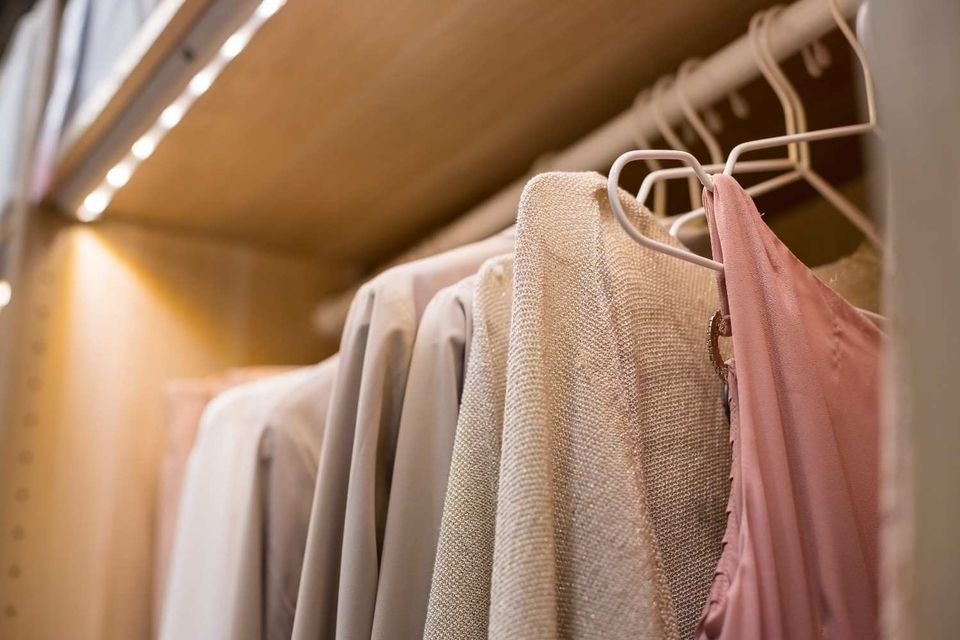
Her scattered clothes still draped over the chair. A blouse on the bathroom door. A cardigan on the arm of the sofa. He collected them one by one, folded each piece carefully, the way you handle something precious, and placed them in the closet.
She had taken so little. Because where she was going, these clothes had no place. The life waiting for her had no use for modest things.
But he folded them anyway. And closed the closet door gently.
Just in case one day she would come back.
The questions started soon enough.
Friends calling. Colleagues asking. Neighbours who already knew but wanted to hear it from him.
He felt it immediately — the embarrassment. The particular humiliation of being the one who was left. He would see it in their eyes before they even spoke. That look. Half sympathy, half something else. Something that looked almost like satisfaction at another person’s misfortune dressed up as concern.
And then the comments.
Innocent questions that weren’t innocent at all.
“We have not seen Fiona for a long time. Is she alright?”
He knew that they knew. He could feel it beneath every carefully chosen word. The mockery wrapped in politeness. The curiosity that had nothing to do with kindness.
He absorbed it all without flinching.
And he never said a single word against her.
Not one.
When people asked, he told them she had taken a job opportunity abroad. A promotion she couldn’t refuse. He said it with quiet pride, as though he was genuinely happy for her. As though it had nothing to do with him at all.
He was not protecting himself.
He was protecting her.
Her name. Her reputation. The version of her that existed in other people’s minds. Even now. Even after everything. Even though she was gone and he had no guarantee she would ever return.
He carried that too. Alone. Inside. Where no one could see it.
This was his internal world. The one he never made public. The pain he never performed. The love he never stopped giving even when there was no one left to receive it.
The couch was the hardest thing.
They had spent countless Friday evenings there together, a blanket shared between them, some film neither of them was really watching. It was their ritual. Small and unremarkable and completely theirs.
After she left, he never sat on that couch again.
Not once. In seven years.
He would walk past it every evening and feel the full weight of every unwatched film, every ordinary Friday that would never come again. So he simply stopped walking that way. He rearranged his movements around the grief, quietly, without telling anyone, the way you learn to walk around a wound that never quite heals.
And he threw himself into work to survive the silence.
Long hours. Late nights. Dawn until long after dark. He built things. Studied things. Started projects. Not because he wanted wealth. Not because he wanted to prove anything to anyone.
But because he had made a quiet decision in the privacy of his own heart —
If she ever comes back, I want to be able to give her the life she deserves.
He never said this out loud.
There was no one to say it to.
So he just kept going. Silently. Faithfully. Without guarantee.
Seven years passed.
And then one day — a knock at the door.
Fiona stood on the other side. Older. Quieter. Something behind her eyes that hadn’t been there before — not sadness exactly, but the particular stillness of someone who has been somewhere far away and returned carrying the weight of the distance.
She didn’t explain herself. Didn’t apologize. Not yet.
She just stood there, looking at him, waiting to find anger or coldness in his eyes.
She found neither.
Paul stepped back and let her in.
He made coffee. They sat together in a silence that was surprisingly comfortable, the way silences between people who truly know each other can be. She left after an hour without saying anything important.
But she came back.
The next time, she cooked.
She arrived with groceries and moved around his kitchen the way she once had, filling the apartment with smells that felt like memory made physical. They ate together. Still no grand explanations. No rehearsed speeches. Just two people, slowly, carefully, finding their way back to something true.
And then one morning she arrived with her luggage.
She stood at the door, her bags on the ground beside her, and looked at him with eyes that were asking the only question she had —
Is there still a place for me here?
Paul looked at her for a long moment. He wasn’t certain of anything. He didn’t know what had happened. Didn’t know if this was permanent or another beginning of another ending.
But his heart — that quiet, faithful, impossibly patient heart —
Felt something loosen.
Like a weight he had carried so long he had forgotten it was there, slowly lifting.
He turned without a word and walked to the closet.
He opened it.
Her clothes were still there. Folded neatly. Waiting. Every modest piece she had left behind, preserved exactly as he had placed them seven years ago.
“Welcome back,” he said. Quietly. As a comfort.
Even in this moment. Even after everything.
Still thinking of her first.
She looked at them for a long moment.
Then she looked at him.
And she understood everything. Every silent year. Every folded blouse. Every Friday evening he had spent alone. Every cruel question he had absorbed without letting a single drop of bitterness touch her name.
She understood all of it in one long, quiet moment.
And she accepted his offer.
And Paul — the man who never called Fiona to ask her to come back, never begged her, never said a single unkind word against her — finally exhaled.
When you ask nothing, you receive everything.



Member discussion