Case Closed — Why Some People Can Never Feel Like Enough
Welcome to Thetoria.com — a space where we explore the real reasons behind life's challenges, and what to actually do about them.
The Man in the Glass Tower
A story about the price of proving yourself — and the moment you finally stop.
Chris's office didn't look like a place where a person lived. Three monitors glowed with stock tickers and security feeds. No family photos. No art on the walls. The only personal item was a framed copy of his first paycheck — a reminder of where he started, and how far he had climbed.
That night, the “Business Person of the Year” award sat on his desk. He had accepted it a few hours earlier to a standing ovation. Now he sat alone in the blue light of his monitors, and he felt more hollow than he could ever remember feeling.
He had checked every box. He had won every race. And it had brought him absolutely nothing.
Where He Came From
Chris didn't grow up in a glass tower. He grew up in a house where enough was a dangerous word.
His father worked at a factory. His mother cleaned other people's houses. Between them, they kept the lights on and food on the table. A slice of butter on bread was a small luxury. A new pair of shoes only arrived when the old ones had worn completely through.
Affection wasn't something they had time for. In that house, love was practical. It meant a roof, a plate, a coat for winter. Hugs and words of encouragement were expenses they couldn't afford — not because they were cold people, but because survival left no room for anything else. They were too busy keeping the family afloat to think about what their son might also need.
So Chris learned to read a different signal. There were no compliments, no praise, no “I'm proud of you.” But sometimes — if he did something useful, if he helped in a real way — he would get a nod. Silent, brief, barely there. He lived for that nod.
But sometimes — if he did something useful, if he helped in a real way — he would get a nod. Silent, brief, barely there. He lived for that nod.
In the summer, he would go out to the fields and forage for horta — wild greens you boil and eat with olive oil and vinegar. It was free food. It helped. And when he came home with a bundle in his hands, he would sometimes get the nod. That was as close to "I love you" as his childhood ever got.
The Schoolyard
At school, it wasn't much different. At that age, kids gravitate toward their own kind — and "their own kind" usually meant the right shoes, the right jacket, a ball to bring to the game. Chris had none of it. His clothes weren't branded. He couldn't bring a ball. He stood on the edge of things and watched.
When he asked for something that might have made him equal in the other kids' eyes, the answer at home was always the same four words: "We can't afford it."
He heard those words so many times that they became a belief. Without money, you had no voice. Without money, you didn't belong. The lesson was simple and brutal: money was the thing that made you matter.
The Vow
After school, Chris came home to an empty house. Both parents were still working. He sat alone and, for a long time, he cried. He didn't understand why they were never there.
But as he got older, that sadness turned into something harder. A decision. He wasn't going to live like this. He was going to prove himself — not just to his parents, but to everyone. He was going to come back a winner, so undeniable that the world would have no choice but to give him the nod.
"Just enough" would never be his life again.
The Climb
He worked double shifts to get through college. He graduated at the top of his class and was recruited immediately. His mind was sharp — sharpened, really, by a childhood where every day required problem-solving just to get by. He worked harder than anyone around him. He climbed fast and he climbed without looking back.
Eventually, he reached the top. CEO of a global company. The glass tower. The award.
He had built the fortress he promised himself as a boy. And standing inside it, he felt nothing.
The Sentry
The problem was that Chris had carried his childhood all the way up the mountain with him.
He wasn't enjoying his wealth. He was guarding it. Every person he met was either useful or a threat. Every conversation was a transaction. The world was still the same zero-sum game he'd grown up in — there was never enough, you could always lose what you had, and you couldn't trust anyone who got too close.
He kept moving the goalpost. A million dollars would make him feel safe. Then ten million. Then a hundred. But it never came. The feeling he was chasing wasn't wealth — it was the impossible guarantee that he would never be hurt, hungry, or invisible again.
"Yes. No. Correct."
When women tried to reach him, he treated those moments the way he treated boardroom meetings. If the conversation had no clear outcome, he ended it. One word answers. "Yes." "No." "Correct." The other person would feel the door close and not know why.
It wasn't arrogance. It was rationing. He used words the way he once used food — carefully, sparingly, only when necessary. Small talk felt like waste. Sitting together watching a movie felt like lost time. Time he could spend working. Time he could spend accumulating.
His mind didn't have a category for just being present with someone. His internal calculator had no way to measure its value. So it registered as zero.
And underneath all of it was a fear he never said out loud: if he lost his money, she would leave. Because in his mind, the only thing he had to offer a woman was financial security. He had been born into a world where love was a transaction. He could not understand why anyone would stay if he had nothing left to give.
Worse than that — he was almost certain that the women who came close to him were there for his name, his fortune, his power. Not for him. He had never been wanted just for himself. Why would that start now?
The Translation Error
Here is the thing that took Chris forty years to understand — and that might take a lifetime for many of us to see clearly:
His parents thought they loved him.
To them, a home, a plate of food, and clothes on his back — that was love. That was everything they had. They weren't withholding affection out of cruelty. They were giving him all they knew how to give.
The word "enough" didn't exist in their vocabulary — not because they were hard people, but because in their world, feeling satisfied was a risk. To stop pushing was to fall behind. The pressure of bills, of labor, of bare survival had made contentment impossible. They couldn't hand him a treasure they had never possessed themselves.
Chris wasn't raised by cruel parents. He was raised by people who spoke love in a language he couldn't hear. And he spent forty years waiting for words they simply didn't know how to say.
The Audience That Never Responded
Every acquisition, every award, every extra zero in the bank — it was all a message sent back into the past. Chris was still chasing that nod, now on a global scale. He kept pushing, waiting for the one moment that would let him finally rest. The two words he had been trying to earn his whole life: "You're enough."
But those words never came. And eventually, his parents died.
The audience was gone. But the performance didn't stop. It got more frantic. Because now the signal to stop could never come. He was working for ghosts — two people who died without ever knowing they had a son who just wanted to be seen.
Case Closed
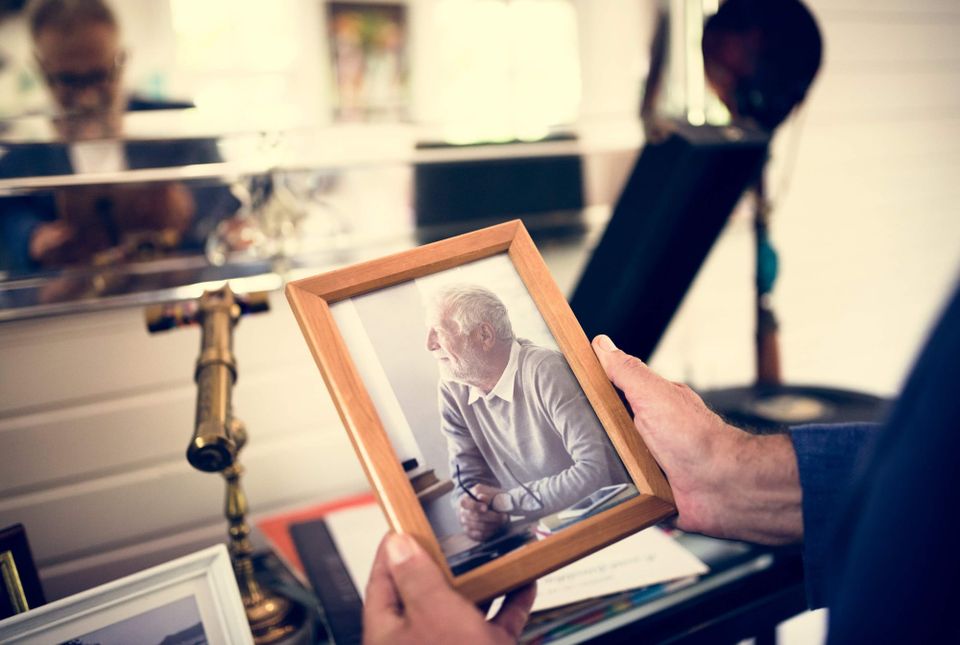
That night in the glass tower, Chris reached into the bottom drawer of his desk and took out an old photograph. Black and white. His parents standing in front of their small house, their faces etched with the exhaustion of people who had never learned how to rest. Between them, a boy.
He looked at that boy for a long time.Then he picked up his gold pen — the same one he used to sign multimillion-dollar deals — and wrote two words on the back of the photograph:
CASE CLOSED.
He didn't need their permission to rest. He only needed his own.
He put the photograph back in the drawer. Not with sadness. With finality.
Then he picked up his phone. He didn't check the stock tickers. He didn't look at the security grid. He dialed a number he had been keeping at a distance for months.
"It's me," he said. His voice was different — softer, without its usual efficiency. "I'm done for the night. Are you free for dinner? A real dinner. No business. No phones. Just a beginning."
He stood up and walked to the glass wall. For the first time, he didn't look at the city as something to defend. He looked at it as a place to finally live.
Note: Like all the figures in this series, Chris is not one person. He is a composite — built from years of watching real lives unfold. The people who inspired his story may never read these words, but they deserve to be understood. Perhaps, through this, they finally will be.
Missed the previous instalment?
This series looks at the invisible walls we build as we climb. If you missed Maggie's story — where we explore the "Golden Cage" of the high-achiever and the myth of being "unlucky" in love —you can find it here: Successful, Admired, and Secretly Alone — The Unlucky in Love Myth.





Member discussion