Do You Have to Be Successful to Deserve a Date?
These days, it is hard to spend time online without encountering a particular kind of advice directed at men. You are single because you are not successful yet. Work on yourself first. Build your value. Become the best version of you. The message is everywhere — in videos, podcasts, and social media posts — and it is delivered with great confidence and conviction. But beneath the motivation and the energy, there is a question worth asking. A quiet but important one. Do you have to be successful to deserve a date?
And it doesn’t stop there. The same voices will tell you that a man must be a leader. That he must be strong, decisive, and capable of providing security to the woman in his life. That these are not optional qualities, but fundamental ones. That without them, a man is somehow incomplete as a partner.
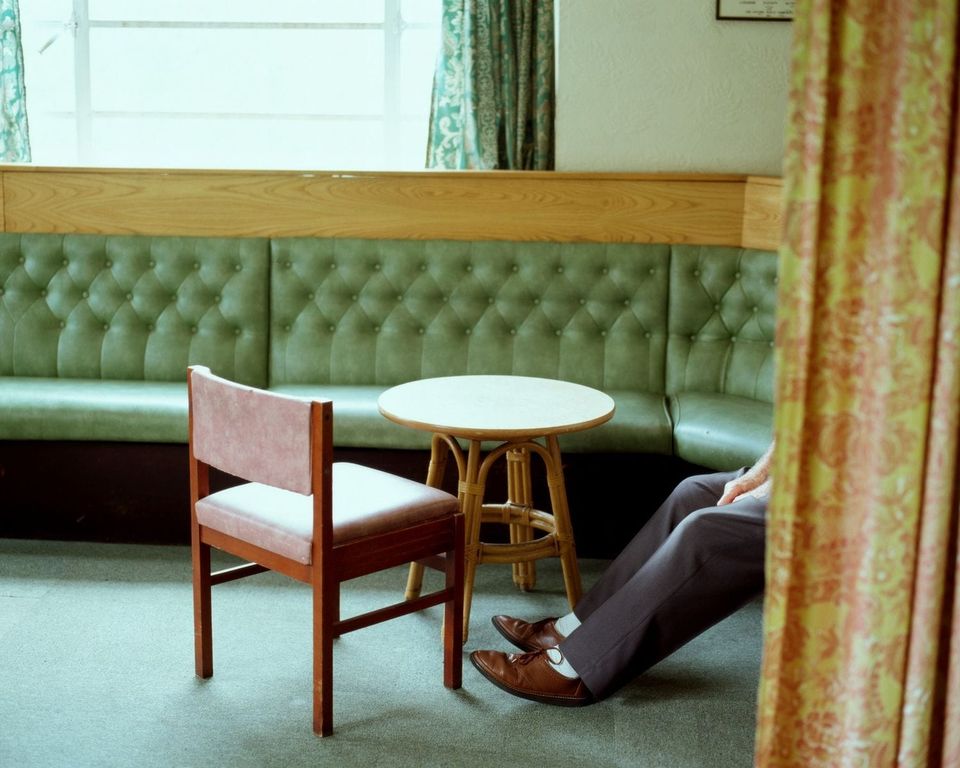
Years ago, I was sitting with friends at a cafeteria, in the middle of a conversation, when a woman at a nearby table began raising her voice. She had either forgotten she was in a public place, or perhaps she didn’t mind at all who heard her. She was speaking to the man sitting beside her — her boyfriend. And her words were precise and unambiguous. “Find money,” she told him. “If you have a lot of money, we will be happy every single day.” The man clearly understood that everyone around them could hear. You could see it on his face — a quiet discomfort, a kind of resignation. He said nothing. Eventually he stood up, walked outside, and lit a cigarette.
One explanation is difficult to ignore. The woman was not simply expressing frustration. She was punishing him. Publicly. Using the cafeteria and everyone in it as her audience, as a silent jury to pressure him into compliance. And the man’s silent exit, the cigarette lit alone outside, speaks more honestly about the reality of that relationship than any definition of security or leadership ever could.
And here comes the deeper question. If that man had already ‘built his value’ — if he had plenty of money, a successful career, everything the advice demands of him — would their life truly have been ‘happy every single day,’ as she put it? Would financial success have changed the dynamic sitting at that table? Would it have made her words kinder, her tone softer, her respect for him greater? Or would the same woman, with the same fears and insecurities, simply have found something else to raise her voice about?
Three years later, I witnessed another scene. A man walking in a park, his girlfriend a couple of steps behind him, and behind her, a group of ten people — her friends — arranged in a triangle formation. They were heading to a high-end restaurant. The man was paying. And so his girlfriend had extended the invitation to her entire circle. He walked alone at the front, perhaps unaware, perhaps fully aware, of the procession behind him.
And here is the irony. The man sitting in silence at that cafeteria table, being publicly scolded for his lack of funds, might very well have been the same man leading that formation in the park just a few years earlier. When he had money, he led the procession. When the money was gone, so was the respect. The variable was never him. It was never his leadership, his strength, or his character. It was his bank account.
These are not stories intending to diminish women. It could easily be the other way around. Just as a man is often told his value is his bank account, a woman is often told hers is her youth or external appearance. Both turn human beings into objects. And both lead to the same quiet desperation at a cafeteria table.
Two scenes. Two different men. And looking at both, the common thread is not weakness or failure or lack of ambition. It is something simpler and more uncomfortable. In both cases, the man’s worth was measured by a single variable. Not by his kindness, not by his character, not by how he showed up for the person beside him. But by what he could provide financially. And when that variable changed, everything else changed with it.
The man leading the formation in the park may have felt proud at that moment. And perhaps he had every right to feel that way — he was generous, he was providing, he was doing everything he had been told a man should do. But if he ever looked back, really looked back, he would have understood something that no amount of success could have prepared him for. That the group of people behind him was not a celebration of who he was. It was a celebration of what he was paying for.
None of this is an argument against self-improvement. Quite the opposite. Growing — financially, physically, emotionally, intellectually — is one of the most valuable things a person can do. Man or woman. But there is a distinction that rarely gets made in these conversations, and it is an important one. Improving yourself because you genuinely want to live a fuller, more meaningful life is a completely different thing from improving yourself as a strategy to attract a partner. One is an act of self-respect. The other, quietly and almost without you noticing, turns you into a product. And products get evaluated, compared, and eventually replaced when a newer version comes along.
Real security in a relationship looks very different from what we are often told. It is not a number in a bank account or a title on a business card. It is the feeling that you can be honest with your partner without fear of judgement. That you can go through a difficult period — financially, emotionally, professionally — and not feel the ground disappearing beneath your feet. It is the quiet confidence that comes from knowing your partner is beside you because of who you are, not what you earn. And genuine leadership in a relationship is not about walking at the front of a formation or always having the answer. It is about being someone your partner trusts deeply enough to be honest with. Someone they would choose on a difficult day, not just a comfortable one.
Because the relationships that actually last — the ones that carry two people through years and decades and all the unpredictable weight that life brings — are rarely built on performance. They are built on something far less glamorous and far more real. Mutual growth. Genuine compatibility. The kind of emotional honesty that has nothing to do with how much either person is earning.
And yet the advice persists. Build your value. Lead. Provide. As if love were a reward waiting at the end of a checklist.
A man can attract someone with money, status, and confidence. That is real. But attraction is the beginning of the story, not the story itself. What sustains something over years — over decades — is almost never what started it.
And the moment you improve yourself for someone else, or to qualify for someone else, you have already placed your self-worth in another person’s hands. That is not strength. That is actually a very fragile place to build a life from.
The cafeteria man may have had money once. But if his sense of value came from that money, then he never really had solid ground to stand on. And without solid ground, nothing built on top of it lasts.
What this is really asking is something simpler than it sounds. Think about why you are building, and for whom. Because a life built for the wrong reasons, no matter how impressive it looks, is still a life built on someone else's terms.
Further reading: Does Money Make You More Attractive?





Member discussion