Feeling Invisible After 60 — What Happens When the Looks Fade
Welcome to Thetoria.com — a space where we explore the real reasons behind life's challenges, and what to actually do about them.
Over the years I've watched people who built remarkable lives slowly withdraw from the world around them. Not all for the same reason. But enough of them that I began to understand something — something most people around them never noticed, and something they themselves could rarely put into words. I want to introduce you to some of these people — one at a time. Their stories might feel surprisingly familiar. The first person I want you to meet is Nelly.
Before you meet Nelly, a small note: she isn't a single real person. She's a composite — built from observations and conversations I've gathered over many years, watching real lives unfold with quiet attention. The people who inspired her story may never read these words. But they deserve to be understood. And perhaps, through Nelly, they finally will be.
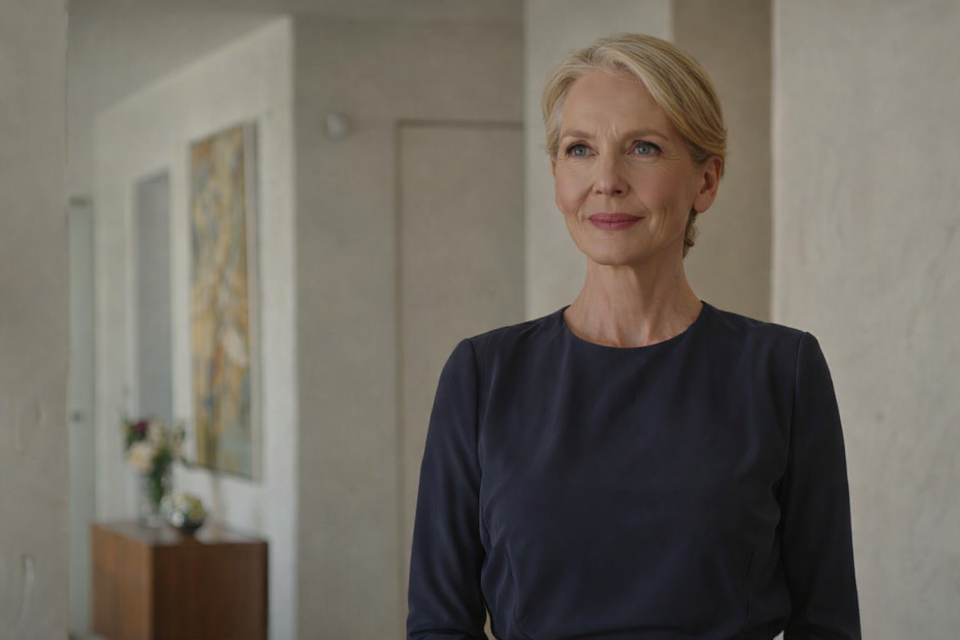
Nelly was the kind of woman who made time stop when she walked into a room. Not just because of how she looked — though that was undeniable — but because of the energy she carried. The confidence. The presence. The refined taste. And a career that demanded she always remain the most polished version of herself. For thirty years she had been the kind of person others oriented themselves around — in boardrooms, at dinner tables, at every gathering she graced. People didn't just notice her. They gravitated toward her.
But somewhere between fifty and sixty, something shifted. Quietly at first. Almost imperceptibly. The calls came less frequently. The invitations thinned. The rooms that once felt charged with her presence began filling with younger energy, newer faces, fresher voices. And by her early seventies, something harder arrived. Not silence this time — but voices. Well-meaning ones. "Why do you keep working?" they would say. "You have more than enough to live a comfortable life." They meant it kindly. But what Nelly heard beneath the kindness was something else entirely. You are done. You are no longer needed. It is time to disappear gracefully.
For years, Nelly had avoided her own reflection. Not consciously. Not dramatically. Just — less. Fewer long looks. Quicker glances. The kind of seeing that confirms you're presentable without asking you to truly look. But one day she stopped. And looked. Really looked. And what she saw was a woman she had never truly accepted. The wrinkles. The softness where there had once been sharpness. The quiet evidence of years she had lived but never quite made peace with.
She began declining invitations — industry events, old friends, casual dinners. People assumed she was busy. She wasn't busy. She was protecting herself.
Because walking into a room had become something entirely different for Nelly. For thirty years, entering a room meant electricity. Heads turning. Eyes lighting up. That invisible current that flows between a celebrated woman and the people around her. She hadn't just enjoyed that feeling. She had been nourished by it. It had told her, wordlessly, every single time — you matter. You are seen. You are enough.
But now she could feel the difference. The glances that used to linger — didn't. The conversations that used to gravitate toward her — drifted elsewhere. Nobody was cruel. Nobody was unkind. The world hadn't turned against her. It had simply... moved on. And somehow that was worse than cruelty. Cruelty she could have fought. Indifference left her with nothing to push against.
So she made a calculation. A quiet, painful, completely human calculation that she never said out loud but lived every single day. If people see me now — without the glow, without the achievements, without the version of me they fell in love with — will they feel pity? Will I see it in their eyes, that slight flicker of surprise, that silent comparison between who I was and who I am now? And if I see that flicker — what will be left of me?
Better not to go. Better to live with the memories and the silence that asks nothing of me.
Because here is what nobody understood about Nelly — and what Nelly barely understood about herself. She had never really built an identity separate from her beauty and her presence. From the time she was young, the world had told her exactly who she was. Beautiful. Talented. Magnetic. She had simply believed them — completely, and without question.
So when those things began to fade — not disappear, just fade — she didn't just feel less attractive. She felt like less of a person. Like the world had quietly returned her. No explanation. No receipt. Just — no longer relevant.
The withdrawal wasn't a choice. It was a confusion. A quiet and devastating question she couldn't answer yet:
If I am no longer who they said I was — then who am I?
What Nelly didn't know — and what nobody had ever told her — was that this question, as disorienting as it felt, was not a sign of collapse. It was a sign of beginning. She had spent a lifetime being defined by others. By her career. By her achievements. By the reflection in other people's eyes. And now, for the first time, that definition had been removed. Not to punish her. To free her.
The question "who am I really?" is not an ending. It is the most important question a person can ever ask.
And the people who would stay to help her answer it — not for her glamour, not for her stunning looks, not for the name, but for her — were already there. Quieter than audiences. Less dazzling than spotlights. But real. And unlike everything that came before, they would not leave when the glow faded. Because they never came for the glow.
If you see yourself in Nelly, know that this is a stage, not a destination. She is the first of five people I'll introduce to you. Once all five stories are told, we will dive deep into how to rebuild an identity that no longer relies on the world's permission to exist.





Member discussion