Why You Still Feel Stressed Even When Everything Goes Well
Introduction: The Paradox of Modern Calm
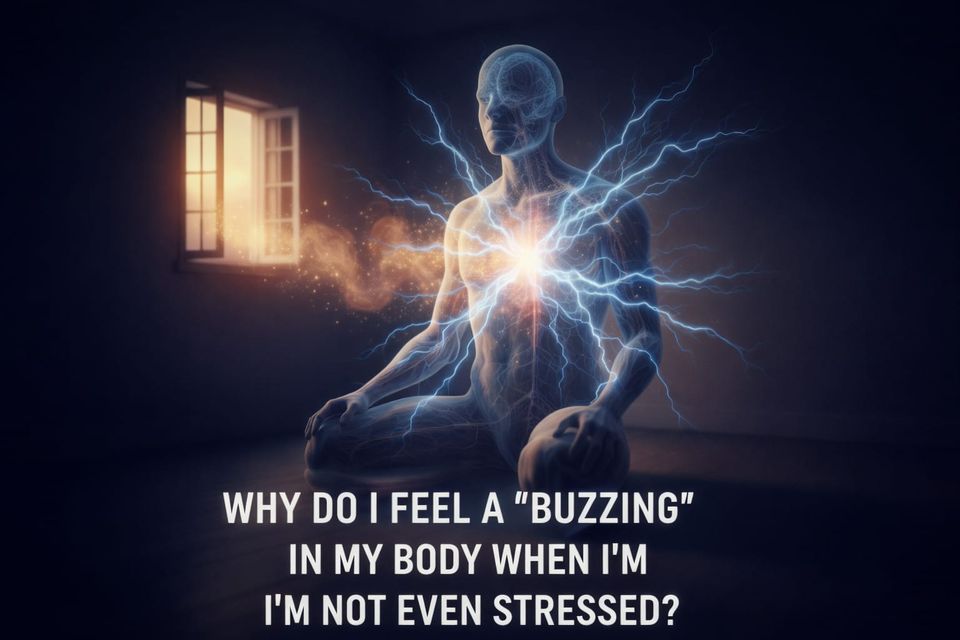
You finally have a quiet evening. No deadlines, no emergencies, no noise. Yet your body doesn't feel calm. Instead, there's a restless hum inside — like your nervous system is still running at full speed. You wonder: Why do I feel stressed when nothing stressful is happening?
This sensation is more common than you might think. It isn't a sign of weakness or illness. It's your body replaying old stress patterns, even when the present moment is safe. What you're experiencing is simply a nervous system that hasn't learned to switch off — one that keeps running long after the danger has passed.
Stress Isn’t Just About Today
Most people think stress is a reaction to what's happening right now. But stress is more like a memory stored in your body.
Imagine your body as a giant battery. Every time you faced pressure — long workdays, financial worries, care-giving, or emotional strain — that battery charged up. And today, it's still holding that charge.
Over time, your nervous system learned to stay "on," even when life quieted down. That's why you can feel wired in peaceful moments. Your body isn't reacting to today — it's replaying yesterday.
The Body's Slow Reset
Think back to the most demanding years of your life. Maybe you worked impossibly long days, raised children while juggling bills, or lived in a high-pressure environment for years on end. During that time, your nervous system adapted to constant stress — it had no choice.
But the body doesn't reset overnight. Even when circumstances change, the nervous system can stay stuck for a long time afterward. Think of it like a car engine left running in a garage long after the journey is over. The car isn't going anywhere, but no one has told the engine to switch off.
This lag explains why people often feel the weight of stress long after the stressful chapter of their life has ended.
Why Doing More Makes It Worse
When you feel restless, your instinct is to do more. You think: If I finish this project, earn more money, or finally organise my life, the stress will stop.
But relentless action only reinforces the loop. It teaches your brain that safety equals effort. Instead of calming down, your nervous system learns that it must stay on high alert to survive. The harder you push, the stronger the pattern becomes.
Try this experiment: imagine taking a full week off. No laptop, no deadlines, no catching up. Just rest. Does the idea feel liberating — or terrifying? If the thought of stopping makes you anxious, that's a sign your nervous system may not have learned to switch off.
This is the paradox: the very thing that could help you heal — rest — feels unsafe. And so you keep moving, keep pushing, keep proving. But until you break that cycle, the background restlessness never truly leaves.
Rest as Re‑Training
Breaking the loop doesn't mean forcing yourself to relax. It means gradually teaching your body that stillness is safe — and that takes more than simply sitting quietly.
Move the energy first. Stored stress is physical energy that never got released. Sometimes the body needs to discharge it before it can settle. Exercise helps, but so do smaller things: a brisk walk, stretching, or even shaking your hands and arms loosely for a minute. These aren't cures — they're pressure valves. They give the nervous system a legitimate outlet before asking it to be still.
Breathe deliberately. Your breath is one of the few direct levers you have over your nervous system. A slow exhale — longer than your inhale — signals safety to your body at a biological level. Try inhaling for four counts, then exhaling for six or eight. Even two or three minutes of this can noticeably shift your internal state.
Name what you're feeling. Research suggests that simply labelling an emotion — "this is anxiety," "this is restlessness" — reduces its intensity. You're not analysing the feeling or trying to fix it. You're just acknowledging it. That small act of recognition tells your brain the situation is under control.
Seek safe connection. We don't regulate our nervous systems in isolation as well as we do in the presence of calm, trusted people. A quiet conversation, time with a friend, or even sitting near others in a peaceful setting can help your body borrow a sense of safety it struggles to generate alone.
Create small predictabilities. Survival mode thrives on uncertainty. One of the quietest ways to counter it is through routine — a consistent sleep time, a morning habit, a regular walk. These aren't rigid rules. They're gentle signals that tomorrow is safe enough to predict.
Redefine what rest means. Rest isn't only sleep or stillness. It's anything that stops the cycle of proving and performing. For some people that's reading. For others it's cooking, gardening, or listening to music with no other purpose. The form matters less than the intention: you are not earning anything right now. You are simply being.
Over time, these practices don't just reduce stress — they rewrite the pattern. Your nervous system learns, slowly and through repetition, that stopping is not danger. It is, in fact, the destination.Over time, these small practices retrain your body to recognise rest as safety, not danger.
Conclusion: The Courage to Stop
If you feel stressed even in quiet moments, you're not weak — you're human. You're experiencing a pattern that hasn't yet learned to switch off.
The way out isn't more effort. It's the courage to stop. To rest. To let your body relearn safety.
So the next time you feel restless, ask yourself: What if I didn't push harder? What if I simply paused?
That pause is the open window. And through it, the smoke of old stress finally drifts away.
Further reading: What Is Survival Mode? Signs, Causes, and How to Escape It.





Member discussion